

Anzac Day Services were held across the shire to honour the Australians and New Zealanders who served and died in all wars, conflicts, and peacekeeping operations.
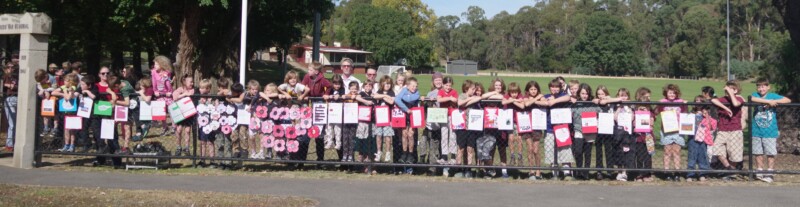
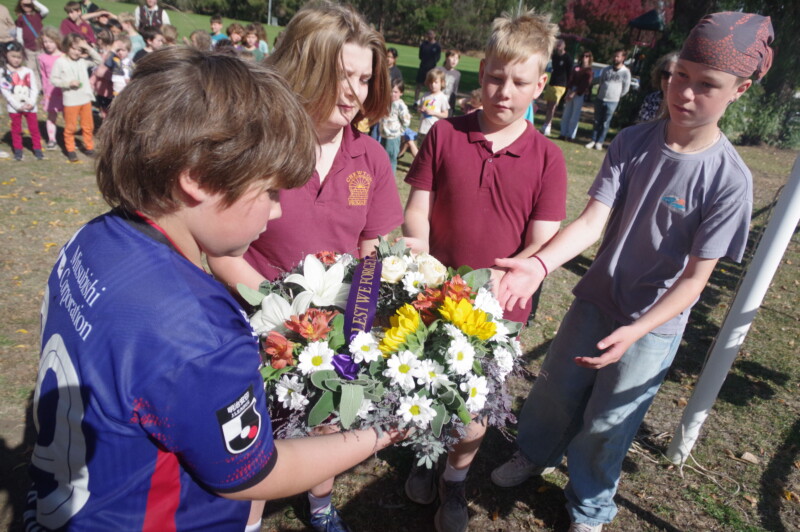
Commencing on Friday, with students from Chewton Primary School gathering at Chewton Soldiers Memorial Park for a small service and to install tributes to our former servicemen and women on the fence.
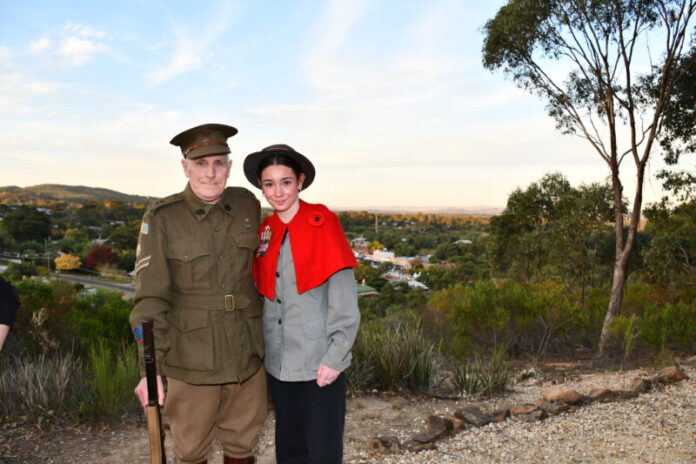
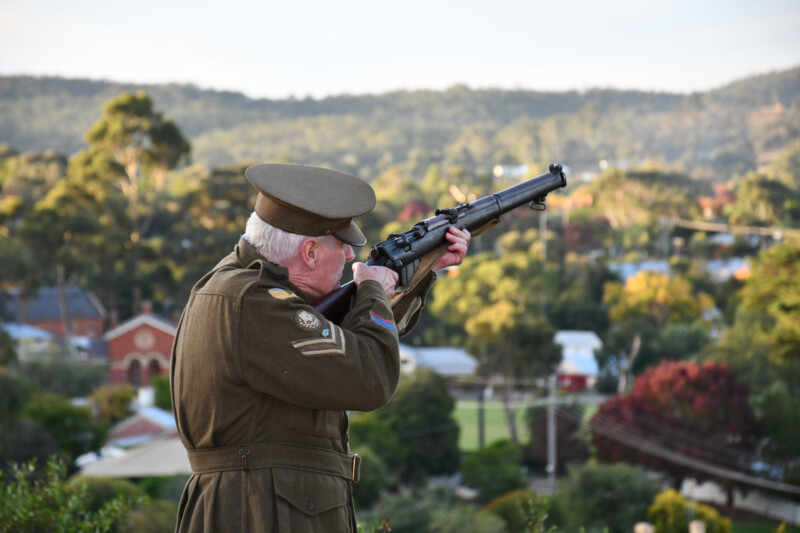
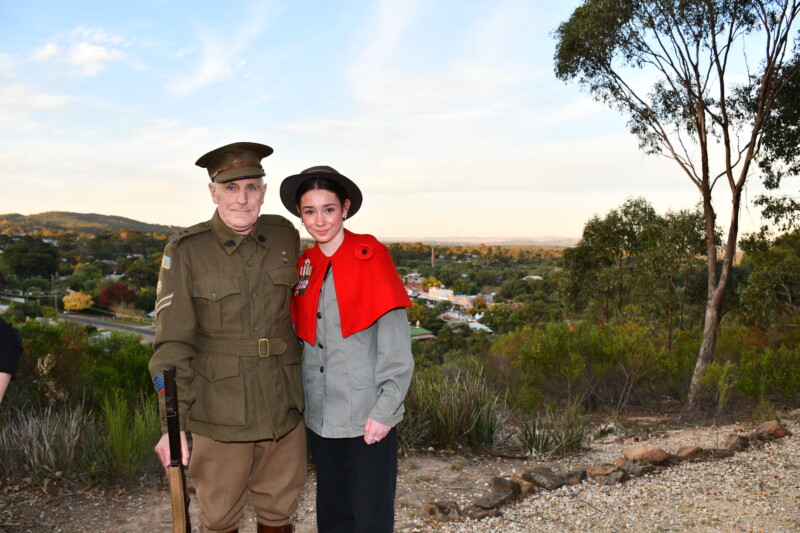
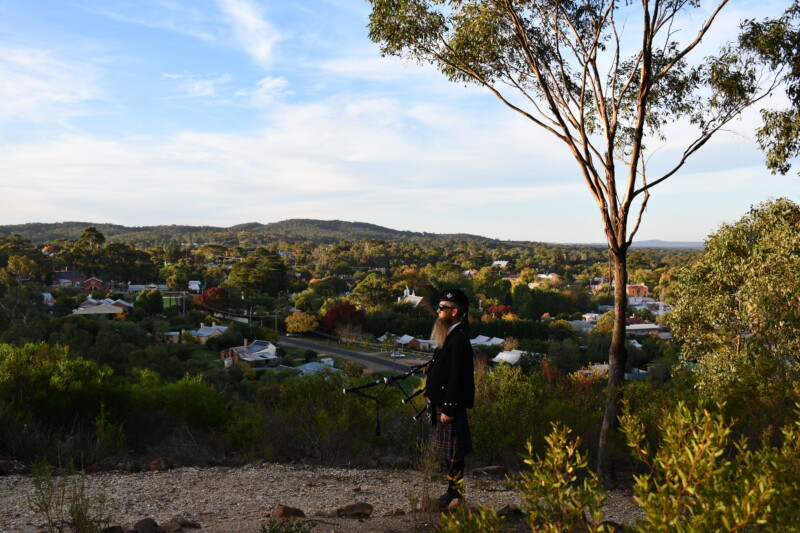
Friday evening, the 110th traditional Anzac Day Eve commemoration once again took place at dusk atop Maldon’s Anzac Hill.
Commencing in 1916, this moving event is understood to be amongst the oldest Anzac services in Australia.
A small service took place as the sun quietly set over the historic township, before Bill Bates, dressed in army fatigues to commemorate the occasion, fired four blanks which cracked through the stillness of the Maldon evening, transporting community members back to that time where Australian and New Zealand troops valiantly fought side by side at Gallipoli and in the trenches for the freedoms we enjoy today.
On Saturday morning, community members rose early to attend dawn services across the region.
At Castlemaine, community members turned out in force for a service at the RSL cenotaph. Castlemaine Lions Club volunteers were on hand with their coffee van to keep those in attendance warm on the crisp Autumn morning with a much-needed cuppa.
Later in the morning, main services were held in Castlemaine, Maldon, Chewton, Harcourt, Newstead and surrounding communities.
Castlemaine service
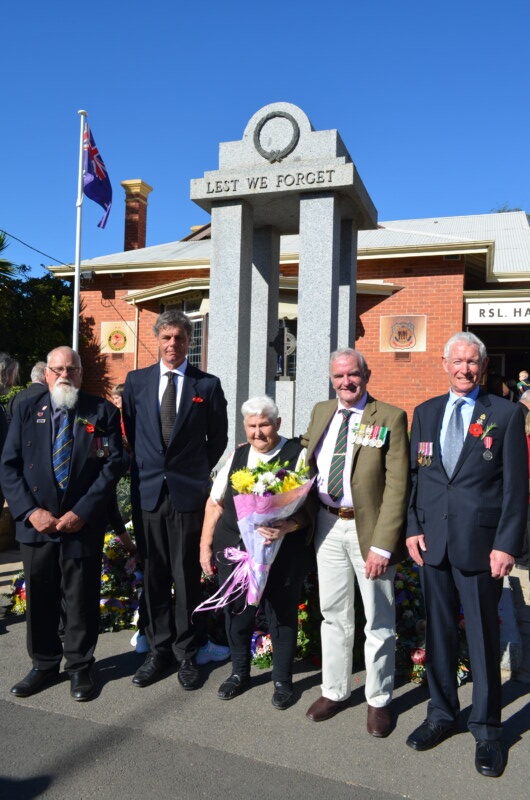
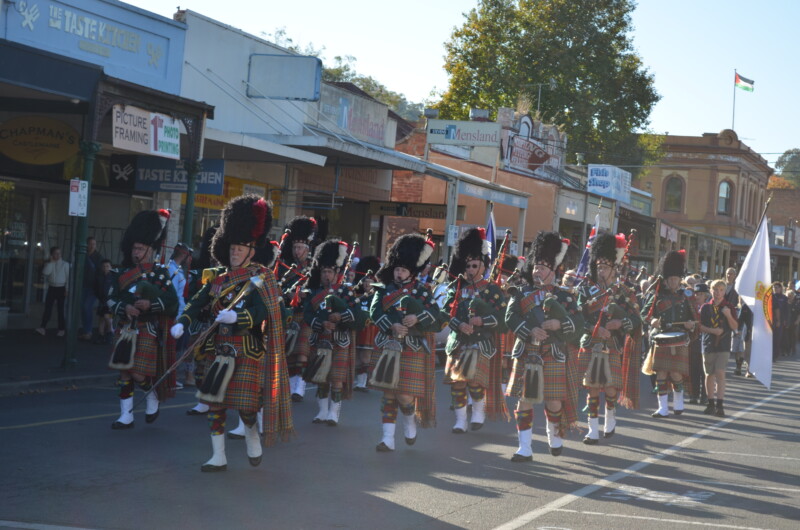
At Castlemaine, marchers were led from the Town Hall by the Castlemaine Highland Pipe Band on a march down Hargraves Street to the cenotaph outside the RSL Hall at Victory Park.
MC Owen Scott then installed the catafalque party, which mounted guard around the cenotaph for the duration of the service, including representatives of the CFA, Victoria Police, Castlemaine SES and Ambulance Victoria.
The crowd then enjoyed performances by Castlemaine Highland Pipe Band, hymns from local singer Emma Sayer accompanied by the Thompson Foundry Band, and an emotive performance of ‘Sons of Castlemaine’ by Maggie Jackson.
The school captains from Sacred Heart College, Kyneton, spoke about the enduring Anzac spirit, and school captains from Castlemaine Secondary College spoke about the important role women have played in early conflicts in the nursing fraternity, on the home front, and in war and peacekeeping missions to this day.
A history
Guest speaker Lieutenant Colonel Neil James then shared some history of his four generations of family connection and service, and spoke about the importance of remembering and honouring the sacrifice of all those who have served before and since.
“We particularly honour the supreme sacrifice, in early death, made by those individuals from our community. Whether we knew them personally, now only know of them, or don’t know of them but respect their sacrifice.
“Around 60 in World War I, 69 in World War II, and one in Vietnam.
“We duly honour those who have rendered service in our defence force in war and who were able to return to our community. But with many of them greatly affected by their war service. Whether this was identified or whether it remained undiagnosed and untreated, then, since or now.
“We remember, acknowledge and honour the anguish experienced by families during a loved-one’s war service, and often after the war for lengthy periods.
“As our war veterans recovered. Or otherwise had to cope over their remaining lifetime with physical, psychological or spiritual wounding.
“We continue to acknowledge and thank all those who paid the cost then, or who still pay a cost now, for protecting the modern and free Australia we often take for granted today.”
He also spoke about Castlemaine’s engineering feats and contributions to the war effort, particularly in World War II.
“Castlemaine’s community efforts in World War II were not just those by its soldiers, sailors, aviators and nurses. Nor just by the years of anguish, or mourning, by many Castlemaine families. It was a much broader community effort, here in Castlemaine, than in most towns of our size then and now. This needs to be remembered and honoured too,” he said.
Finally, he spoke about the importance of respecting our cenotaphs, memorials and war dead.
“No matter who our community’s war dead and wounded, or their bereaved or burdened families, were or remain:
– or where they came from and why;
– or whatever their ethnicity, class, religion, or passions were or were not;
– or who they voted for or against, and why.
“Our war dead, in particular, all remain equal in the supreme sacrifice of dying for us. And all of us surely need to continue respecting this.
“By their very intention, spirit and nature, and by our respect for them as a community, our cenotaphs and other community war memorials remain venues that are perpetually and intrinsically above all political partisanship.
“Our cenotaphs and our other community war memorials should never suffer misuse by unthinking, misguided or ideologically-motivated actions,” he said.
Lastly, he encouraged community members to take the time to visit the RSL Hall, view their extensive collection and learn about our local stories and connection to ensure this sacrifice is passed on to future generations.
The Ode
The service was wrapped up with the reciting of The Ode by RSL president Greg Hughes and the performance of the Last Post by Thompson’s Foundry Band bugler Jeremy Meaden, pausing for a minute’s silence, before he capped off the service with the soaring Reveille.
Community members then gathered inside the RSL Hall for the annual gunfire breakfast, complete with Anzac Day biscuits.
Saturday’s service. Photo: Lisa Dennis.