
As the residents of Harcourt, Ravenswood and surrounds enter the recovery stage, insurance claims begin to take centre stage, and they are being cautioned to beware of ‘disaster chasers’.
The Insurance Council of Australia estimates that claims related to the bushfires across Victoria have reached more than $200 million, across 3123 claims. A large number of these claims are from the Harcourt, Ravenswood fire.
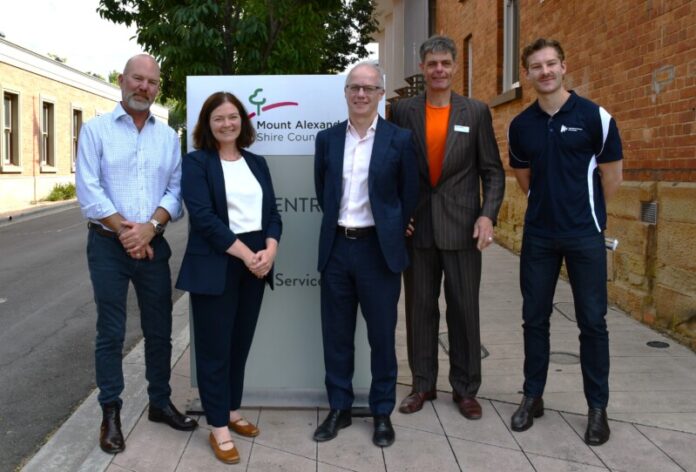
Insurance Council Australia CEO Andrew Hall, who visited the region earlier this week, said they had seen a huge uptick in disaster chasers recently.
Known as claims managers or handlers, ‘disaster chasers’ will door-knock areas following natural disasters, offering to help residents deal with their insurance company and get their home rebuilt.
Mr Hall said they would often masquerade as builders and go door to door offering to help settle residents’ claims.
“It’s an enticing offer, and I can understand why people would sign up to it,” he said.
“It can be quite appealing because you’ve been through hell and back and the last thing you want to do is go through the process of doing an insurance assessment.
“But they are not a charity. They will take a chunk of your sum insured to pay for their services [up to 30-40 per cent] and they will often do work that may not be warranted by the insurer,” Mr Hall said.
While ‘disaster chasers’ operate legally, the Insurance Council CEO encourages people to exhaust all options with their insurance company before signing anything.
“Make sure you call your insurance policy. You may be entitled to a range of things under your policy, such as free accommodation or a rental car.”
According to Mr Hall, bushfires are more likely to result in a total loss of homes, compared to floods or storm events. This often results in a cash settlement with the insurer.
“Post-bushfires, we often see a range of emotional decisions. People will want to rebuild, but to a higher standard, so they never have to go through it again. Others want to just take a cash settlement and leave the area because they don’t want to experience that trauma again,” he said.
Mr Hall said financial counsellors were critically important during natural disasters, and he encouraged residents to access a local service.
“And if you’re having a problem with your insurer, make a complaint to the insurance company,” he said.
“There are regulations around how your complaint will be handled. If you’re not satisfied with your insurer and how they are handling your complaint, you can go to the AFCA (Australian Financial Complaints Authority), which is the financial complaints ombudsmen. It is a free service, and their decision is binding on the insurer if they are not meeting their obligations.”
Throughout regional Australia, particularly in acute fire-prone areas, the ICA has noticed that under-insuring is becoming a big problem, as new bushfire mitigation requirements have come into effect (BAL – Bushfire Attack Level).
“People are often not fully aware when they are insuring their homes, what the true cost of replacing their home is, if the worst happens,” Mr Hall said.
“People will often insure the home for about what they pay for it, and in regional areas, with building inflation costs, which have been going up significantly year on year, and the lack of trades, and extra requirements through BAL, you can often see a home costing twice what its market value is.”
Mr Hall said no two events were the same, but a noticeable difference in the Harcourt, Ravenswood fires, was the high number of small business claims.
“It shows the impact was not just on residential but also on commercial properties. Commercial insurance operates a bit differently from residential and retail insurance, it’s usually through a broker, and you decide what you want to cover and what you don’t.
“We’re tracking that with interest to see how fast claims are assessed and closed.”
ICA wants residents to take photos or videos of damage to their property and contents to help support their claim. They urge residents to speak to their insurer before undertaking any clean-up activities.
For more information, visit insurancecouncil.com.au/consumers/help-in-disasters