Jade Jungwirth
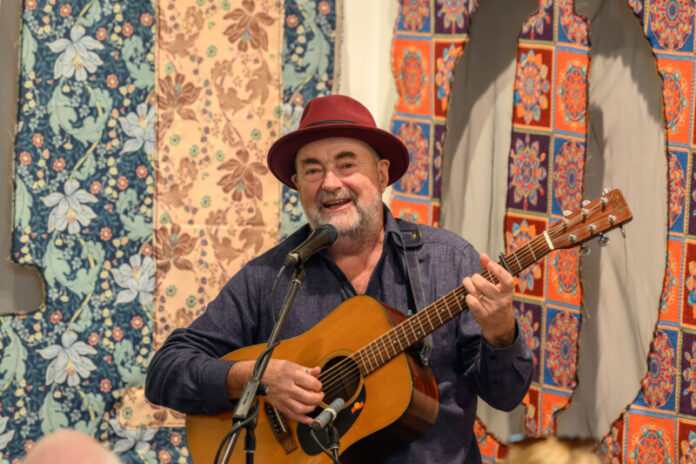
A well-known local performer and community musician, James Rigby told the Mail, “There’s no money in it, but the lifestyle and the experiences are fantastic.”
Growing up in Melbourne’s leafy eastern suburbs with a pianist mother who valued music highly, James and his two brothers were encouraged to learn musical instruments.
Playing the cello throughout school, James said classical music and discipline were not a good fit for his personality.
Going to gigs in Melbourne, James and his two brothers fell in love with Irish music.
“It was the 70s, and we’d go to every party we could find where they were playing Irish tunes,” James said.
“We found the fun in folk music that we didn’t find in the classical music world.”
Growing up racing yachts, getting a job at a yacht shop seemed like a natural transition, but a visit to the hospital to get his appendix taken out and a lovely nurse changed his career trajectory.
“I worked for a fellow who was not honest and not kind, and I had this moment while recovering from my appendix, where I thought, ‘That looks much more kind and friendly than what I’m doing now’,” he said.
Joining the choral society at university, which James described as a “boozy social club that met once a week and sang,” led him to meet the love of his life, Jane.
“One of the really fantastic things about being in choirs and playing music is that you end up in these extraordinary places that you would normally have to pay a lot of money to go and see things,” he said.
“It is much more fun, standing on the stage with Archie Roach and Shane Howard, than it is sitting in the audience watching.”
James and his wife Jane, a midwife, travelled to work in remote communities in Alice Springs for seven months, before embarking on a six-month bike trip around France and the UK.
According to James, who worked on and off at the Royal Melbourne Hospital and the Alfred for many years, the emergency department is not as dramatic as on TV shows, “Except sometimes”.
“It’s very routine most of the time. Mostly people come in, and they’ve got chest pain, and you send them to the coronary care ward. Or they come in with a fracture, and we make them comfortable until we put a plaster on it. Someone comes in with a bang on the head, and we do four hours of head injury obs before we send them home,” he said.
“But then someone comes in psychotic and lifts a gun out of a policeman’s holster, and things get dramatic.”
Starting his nursing career in 1984, James said there was a lot of resentment towards the males because they were given a smoother run into the good jobs than the women.
“Which is a fair criticism; lots of the senior jobs and management jobs were held by men,” he said.
“At that time, nurses were paid 30 or 40 per cent less than a teacher or a physical therapist was. That was the legacy of women being paid only a fraction of what men were getting paid in any given profession.
“It was in ’87 that we had nursing strikes, and they created the first version of a new career path where we were better rewarded.”
James said he felt a huge amount of pride in the strength of the teams he worked with, particularly at Royal Melbourne.
“That cohort was a bunch of women of different ages, different sizes, heights and nationalities, and we’d have people come in and try and intimidate them because they were a bit drunk and their days weren’t going well. The nurses would say, ‘Mate, pull your head in. I’m in charge here. You don’t get to try and intimidate me here’. They were the toughest bunch of really smart, really calm, really cool people who worked so hard to make people’s days not quite as bad as when they came into the emergency department,” he said.
James and Jane moved to Maldon in 1993, just before the birth of their second child.
“Our first child was banging between the front door and back door in a little terrace house. It looked like a lousy place for a toddler to be,” he said.
Over time, James found he was playing more music gigs and working less as a nurse.
When his brother, a harp maker, needed help catching up on orders, James helped out for a while. He ultimately decided to give up nursing and become an instrument maker and musician.
“Both my brothers, my wife and I were in a band called Blackwood, and we were gigging a lot, going to festivals eight-10 times a year. Port Fairy, Woodford, the National in Canberra every year, over in Perth and Sydney. We did all of the music festivals all around Australia,” James said.
In 1999, James wound up leading the men’s choir at Castlemaine Community House.
“A capella singing for women was a very big thing at the time, but they were having trouble finding a teacher for the men’s singing group. I really had no idea what I was doing. I enjoyed the group of people, and they taught me how to be a singing leader,” he said.
“They weren’t there to criticise. They wanted to be led, and they were very kind and patient and let me find songs that worked and build up the confidence to get more and more ambitious as to how that all worked.”
In 2006, James, Jane and their three girls packed up and went on a six-month trip around half of Australia – performing as they went.
“Our daughters have always been going to festivals, listening to their uncles playing music, watching people play music,” he said.
“The girls would fire up the marimba to gain some attention, and we’d fire out the lantern and put the hat out and. We made enough money at camp group concerts to buy the next lot of petrol. It was very much hand to mouth.”
The family even recorded a CD in camp kitchens on the way, selling them for $10.
“It turns out all the grey nomads had burned through all their music by the time they got to Adelaide and were desperate for a new CD, so we sold quite a lot!
“We also went into several Aboriginal communities while we were travelling as well, teaching in tiny little schools. We’d go in and teach singing and dancing, with marimbas, violins, accordions and a trombone!
“It was hard work, but I think it was really good for us,” he said.
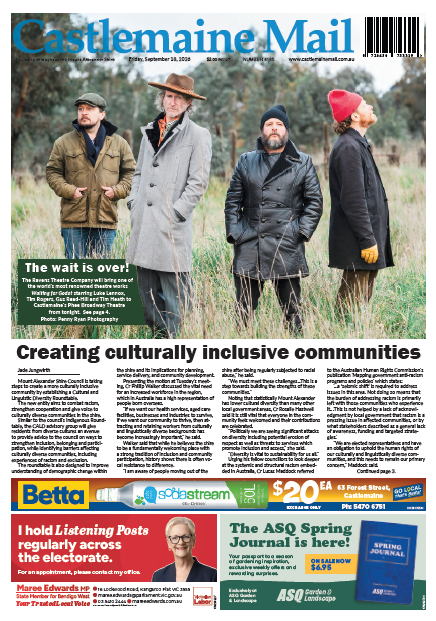
The second installment of James’ two-part interview will be published in next Friday’s Mail on September 18.